


DES MOINES, Iowa (CN) - Iowa has been a reliably red state for the better part of a decade, but competitive primary races have captured the attention of Iowa voters and the nation ahead of the fall general election.
A well-financed group of candidates are vying to replace retiring Republican Governor Kim Reynolds, and for an open U.S Senate seat vacated by Republican Senator Joni Ernst. Democrats also believe they have a shot at unhorsing U.S. Representative Mariannette Miller-Meeks, who barely eked out a victory in her 2020 bid for reelection to the 1st Congressional District.
The word "battleground" may be overused in politics, but it fairly describes the political landscape in Iowa ahead of the June 2 primary. Both parties are energized, according to Iowa political observers. The Cook Political Report called the Iowa governor's race an "official barnburner" and a "tossup" last month.
Absent a "blue wave" in the fall, these Iowa contests are likely to be nail-biters. Iowa Democrats may be buoyed by new optimism looking forward to the midterm election, but President Donald Trump remains a formidable force among MAGA faithful, as witnessed by recent primary defeats of Republicans who strayed from the reservation.
Iowa has seen little turnover since 2014, when veteran Democratic Senator Tom Harkin retired and was replaced by Ernst.
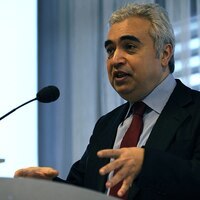
"As a result, this is sort of a reshuffling of the deck with new candidates in a very different political age," said Rachel Paine Caufield, professor political science at Drake University. "Those 12 years have made such a difference for both parties. So, in some ways, this is an opportunity for both parties at the statewide level for the first time in a long time to figure out what their primary message is going to be to voters."
The race for governor
At the top of the state ticket, five Republican candidates are competing to run against Democrat Rob Sand for governor next fall. Two-term congressman Randy Feenstra, who abandoned his seat in the 4th Congressional District to run for governor, was expected to sail to victory in the primary, but he hit strong headwinds from four opponents: State Representative Eddie Andrews; ag and tech investor Zach Lahn; pastor and former State Representative Brad Sherman; and former state Department of Administrative Services Director Adam Steen.
Sand, currently the Iowa state auditor and the only elected Democrat in statewide office, is unopposed for the Democratic nomination. He's seeking to become the state's first Democratic governor in 15 years.
"I'm really interested in the gubernatorial primary on the Republican side because I don't know how Trumpy the state is when Trump is not on the ballot," Caufield said. "All of the different factions within the Republican Party are really interested to find out what statewide the Republican Party looks like right now."
The GOP gubernatorial candidates are trying to negotiate the various factions, she said. "I don't know who is being successful because none of them seem to be breaking through beyond a Republican audience right now. Like, I expected Randy Feenstra to be everywhere right now. And he's not." Is that smart? "It might be. He might be keeping his powder dry and waiting till after a primary and define himself to the statewide electorate before the general election."
One GOP poll had Feenstra with 41% of the Republican vote with the rest of the field in single digits. The winner needs 35% of the primary vote or the decision goes to a state party convention.
Senate showdown
In the race to replace Ernst in the U.S. Senate, three Democrats are vying to run against Republican Ashley Hinson, who is currently representing Iowa's 2nd District in Congress: Jim Carlin, a lawyer and former state senator; Josh Turek, a state representative; and Zach Wahls, a state senator.
Turek and Wahls considered the top two candidates in the field. Turek, however, has a substantial financial edge as he has received $4.5 million from the national VoteVets organization. Though not a military veteran, Turek was born with spina bifida, which he says is a result of his father's exposure to Agent Orange while serving in the Vietnam War.
Wahls gained notoriety early in his political career when serving in the Iowa House of Representatives, at a time when the state was riven by debates over gay marriage. Wahls gave a floor speech in 2011 talking about how he was raised by two lesbian mothers.
Caufield said Wahls uses that moment to introduce his campaign to voters in this election. "Zach Wahls is kind of clearly somebody who came up through his speech on the floor talking about gay families and LGTBQ+ rights and starts his pitch to voters by saying, 'I came into this trying to defend my family' and then of course shifts it to 'Now I'm going to defend families like yours.'"
At the same time, she said, "Turek's opening ad was really very well done and highlights a very different kind of working class roots, a hardship story, and kind of avoids some of the overt culture war issues. And that's the decision that the party's going to have to make: To what extend is the party leaning into those culture war issues in 2026?"
Another tight battle for the 1st
Two Democratic candidates are competing in Iowa's 1st Congressional District for the right to face off against Miller-Meeks. Christina Bohannan - a law professor, engineer and former state representative - is making her third try at unseating the Republican incumbent after coming close in two previous elections. She faces her first Democratic primary challenger in Travis Terrell, a first-time candidate focused on working families.
The district is largely rural, with some larger cities, including Ottumwa, which is historically a blue-collar city. "We've seen those districts become pretty safe seats for Republicans, like in the last 10 years. But at the same time we've never had this kind of perfect storm of high inflation coming out of Covid" and a continuation of those issues as it relates to oil and food prices.
One challenge Iowa Democrats face is a substantial voter registration deficit compared to Republicans, who hold a 195,000 registered voter advantage, according to the latest Iowa Secretary of State figures.
The Republican Party has a "massive advantage," Iowa State University professor Kelly Shaw said, with about 20,000 more registered voters in all congressional districts except the overwhelmingly red 4th District.
"A 20,000 voter registration advantage is impressive, but registrations don't get out and vote," he said. Both parties have to motivate not just their base but unaffiliated voters as well, he said.
And nothing motivates Iowa voters more than their pocketbooks.
"Instead of a positive coattail we have a negative coattail in the sense that our economy is really bad," Shaw said. "For better or worse, the executive is usually the one that is blamed for that. I think at the federal level .... we can blame President Trump for some of the economic policies, that have kept gas prices high, that have kept input prices high on diesel and fertilizer for the farmers."
At last, Iowa Democrats are gaining momentum on economic issues long thought to be dominated by Republicans.
"They're finally on the offensive and able to bring their message regarding high costs, the cost of the war, how much a gallon of gas is," Shaw said. "Economic issues which, honestly, had for a very long time been something that most voters in Iowa - and frankly, most voters at the federal level - had thought were best carried out by Republicans."
Source: Courthouse News Service